
TL;DR
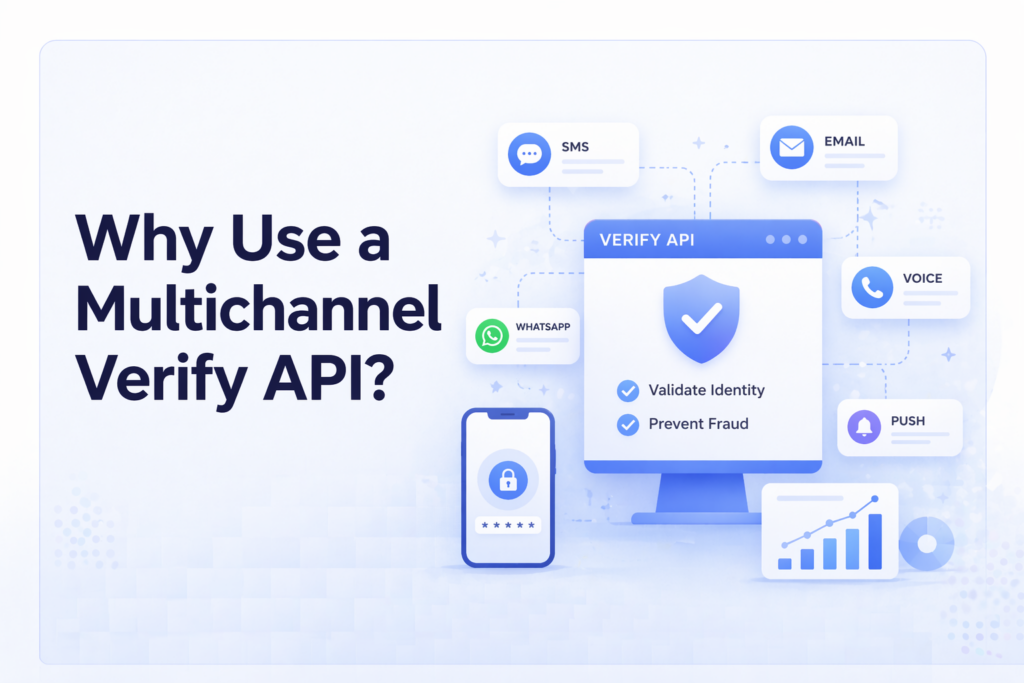
A Multichannel Verify API lets you send one-time codes (OTPs) to users to confirm their identity — at signup, login, or during sensitive actions. A multichannel Verify API goes further: instead of relying on a single delivery channel, it tries the best option for each user and falls back automatically if delivery fails.
The key benefits:
- Higher delivery rates — automatic fallback means fewer codes that never arrive
- Better user experience — users get codes faster, on the channel they actually use
- Global reach — different regions respond better to different channels
- Higher conversion rates — fewer failed verifications mean fewer drop-offs at critical moments
- Cost optimization — route through the most cost-effective channel per region
- Built-in redundancy — no single point of failure in your verification flow
- Stronger fraud prevention — layered delivery strategies reduce interception risk
In this article, we’ll cover what a Verify API actually is, why single-channel verification falls short, and the seven concrete benefits of going multichannel.
What Is a Verify API?
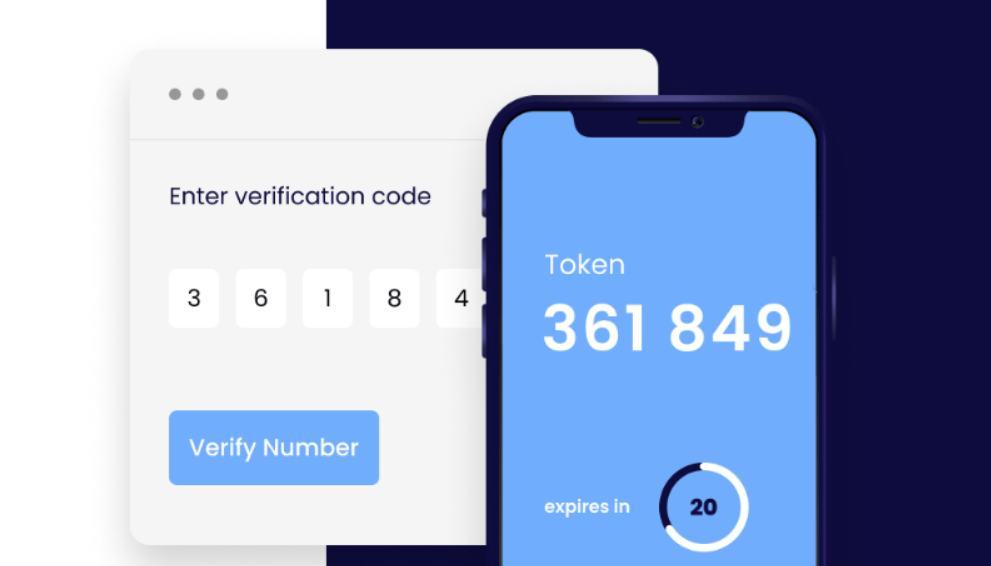
A Verify API is a programmable service that handles the entire one-time password (OTP) flow on your behalf. Instead of building your own code generation, delivery, expiry, and validation logic, you make a single API call — and the service takes care of the rest.
How it works:
- Trigger — your application sends a verification request with the user’s phone number and your preferred channel settings
- Delivery — the API sends a short-lived code to the user via the specified channel
- Fallback — if delivery fails or times out, the system automatically tries the next channel in your configured order
- Validation — the user enters the code; your app calls the API to confirm it’s correct
- Result — the API returns a verified status, along with delivery metadata, timestamps, and webhook events your team can use downstream
Most common use cases:
- Account creation — confirm a phone number before completing signup
- Login authentication (2FA) — add a second factor to protect user accounts
- Transaction approvals — verify high-risk actions like payouts, password resets, or policy changes
- Phone number updates — confirm a new number before overwriting the primary contact on file
What makes a modern Verify API different from a basic SMS gateway is the layer of intelligence built on top of delivery. It manages code expiry, rate limits, retry logic, fraud controls, and channel orchestration — so your development team doesn’t have to build or maintain any of that infrastructure themselves.
For developers, integration is typically fast: a single endpoint, clean responses, webhook events, and SDKs available in Node, Python, PHP, Java, Go, and Ruby. The verification logic ships in minutes, not weeks.
What Does Multichannel Verify API Mean?
Multichannel verification is the ability to deliver OTP codes through more than one channel and to switch between them automatically based on what actually works for each user.
The channels typically available are:
- SMS — the universal fallback; works on any phone, no app required
- WhatsApp — preferred in many markets across Latin America, Europe, Africa, and Southeast Asia
- Viber — dominant in Eastern Europe and parts of Southeast Asia
- Telegram — growing adoption in tech-savvy and privacy-conscious user bases
| Channel | Best For | Strengths | Limitations |
|---|---|---|---|
| SMS | Universal fallback | Works on any phone, no app required, highest global reach | Subject to carrier filtering, delivery delays, higher cost in some regions |
| Latin America, Europe, Africa, SEA | High open rates, free to receive, familiar UX for users | Requires app to be installed, channel fees apply on delivery | |
| Viber | Eastern Europe, SEA | Strong penetration in key markets, rich message format | Limited reach outside core regions |
| Telegram | Tech-savvy & privacy-conscious users | Growing adoption, reliable delivery where popular | Niche audience, not suitable as primary channel for broad user bases |
The key idea isn’t just having multiple options — it’s the intelligence behind when and how each one gets used. A well-configured multichannel setup might look like this: try WhatsApp first in a high-penetration market, fall back to SMS if it doesn’t deliver within 30 seconds, and log the entire path so your team can see exactly what happened.
This means your verification flow adapts to the user’s reality — their region, their installed apps, their network conditions — rather than forcing every user through the same single channel regardless of whether it’s the right fit.
7 Key Benefits of Using a Multichannel Verify API
Here’s a breakdown of each benefit of using a multichannel verify API and why it matters in practice.
1. Higher Delivery Rates
The most direct benefit of the multichannel verify API is simple: more codes actually arrive.
When a single channel fails, a multichannel verify API doesn’t stop. It moves to the next channel in your configured order automatically, within the timeout window you define, without the user having to do anything.
This matters because delivery failure is rarely random. It tends to cluster around specific regions, carriers, or time windows. A setup like WhatsApp → SMS means:
- Users in high-WhatsApp-penetration markets get fast, app-based delivery
- Users without WhatsApp installed still receive the code via SMS
- If neither delivers, additional fallbacks can be configured
The result is a verification flow that’s resilient by design and not dependent on any single provider or channel performing perfectly at all times.
2. Improved User Experience
A verification code that arrives instantly on the app a user already has open is a fundamentally different experience than one that takes 45 seconds to land via SMS.
A multichannel verify API improves UX in two ways. First, it increases the likelihood that the code arrives quickly on the channel the user is already actively using. Second, it eliminates the dead end of a failed delivery.
The experience becomes:
- Faster — delivery attempts happen in parallel or in rapid sequence
- Less frustrating — no unexplained delays or silent failures
- More trustworthy — users feel the product is reliable, even if they never see the fallback logic working behind the scenes
3. Global Reach Without Friction
There is no single channel that works best everywhere. SMS has universal reach but inconsistent reliability. WhatsApp dominates in Brazil, India, and much of Europe. Viber is the default messaging app in Ukraine, Bulgaria, and the Philippines. Telegram has strong traction in markets with privacy-conscious users.
A multichannel Verify API lets you adapt delivery strategy by region without building separate logic for each market. You can configure a default channel order globally and override it per request — for example, leading with WhatsApp in Latin America and falling back to SMS, while leading with Viber in Eastern Europe.
The practical impact:
- Users in every region receive codes through the channel most likely to reach them
- No manual management of region-specific providers
- A single API handles global delivery without additional complexity on your end
For platforms with an international user base, this alone is a significant operational advantage.
4. Higher Conversion Rates
Verification is a gate in your user flow. Every time a code fails to arrive, a user hits that gate and can’t get through, and most won’t wait around for a second attempt.
The impact shows up most clearly in two places:
- Onboarding flows — a failed verification at signup means a lost user before they’ve ever experienced your product
- High-stakes actions — a failed OTP during a payment or account recovery creates frustration at exactly the moment when trust matters most
5. Cost Optimization
SMS pricing varies dramatically by country. Routing every verification through SMS regardless of region means paying premium rates in expensive markets, even when a cheaper, more reliable alternative exists.
A multichannel verify API gives you control over that cost structure. You can:
- Lead with OTT channels (WhatsApp, Viber, Telegram) in markets where they have high penetration — these are often cheaper than SMS and more reliable
- Pay only for what delivers — with SMS.to’s Verify API, OTT channel fees only apply when the message is actually delivered; skipped or failed channels aren’t charged
- Use SMS as a universal fallback rather than the default, reserving it for cases where no other channel works
Over time and at scale, routing intelligently across channels — rather than defaulting to SMS for everything — produces meaningful cost savings without any reduction in delivery quality.
6. Built-In Redundancy and Reliability
SMS-only verification has exactly that: if there’s a carrier outage, a sender ID block, or a regional filtering event, your entire verification flow goes down with it. There’s no fallback, no alternative, no way to recover without manual intervention.
A multichannel verify API eliminates that single point of failure. The system is designed to keep working even when individual channels have issues, because:
- Fallback logic runs automatically within configured timeouts
- Delivery attempts are tracked in real time via webhooks and logs
- Your team can see exactly what path each verification took — useful for support and for diagnosing patterns
For businesses where downtime in the verification layer has direct revenue consequences, this redundancy isn’t optional — it’s a core infrastructure requirement.
7. Better Fraud Prevention and Security
Multichannel verification doesn’t just improve delivery — it also makes your verification flow harder to abuse.
OTP interception is a known attack vector, particularly on SMS, where SIM swapping and SS7 vulnerabilities create real risks. Distributing delivery across multiple channels — and letting the system choose dynamically — makes it harder for bad actors to predict or intercept the delivery path.
Beyond channel diversity, a well-built Multichannel Verify API includes additional fraud controls:
- Rate limiting per user, IP address, and device to prevent brute-force attempts
- Short expiry windows for high-risk actions like payouts or password resets
- HLR/MNP lookup integration to validate numbers before sending, keeping your contact list clean and filtering out invalid or ported numbers
- CAPTCHA triggers on repeated failed attempts to block automated abuse
The combination of intelligent channel routing and layered fraud controls means your verification flow is more secure — not just more reliable.
Disadvantages of Single-Channel Verification
SMS-only verification works well enough in ideal conditions. Here are the main problems of relying on a single channel:
- Delivery isn’t guaranteed. SMS messages can be delayed, filtered, or blocked entirely depending on the carrier, the country, or the content of the message. In some regions, local filtering rules flag OTP messages as spam before they ever reach the user.
- Regional reliability varies significantly. What works reliably in Western Europe may perform poorly in Southeast Asia or parts of Africa. Carrier infrastructure, number portability, and local regulations all affect whether an SMS actually lands — and SMS-only providers offer no alternative when it doesn’t.
- Cost is unpredictable. SMS pricing varies enormously by country. Sending a verification code to a user in the US costs a fraction of what the same message costs in certain markets in Asia or the Middle East. With a single channel, you’re locked into that cost structure with no way to optimize.
- No fallback means no second chance. This is the core problem. If an SMS doesn’t arrive, the user has no recourse — they can’t request it via a different channel, they can’t proceed, and most won’t wait around to try again. Every failed delivery is a potential lost signup.
Common Use Cases for Multichannel Verification
Multichannel verification applies across virtually any product that requires user authentication — but the impact is most significant in platforms where verification volume is high, user bases are global, or failed delivery has direct revenue consequences.
SaaS Platforms
For SaaS products, verification happens at two critical moments: when a new user signs up, and every time they log in with 2FA enabled. Both are high-stakes from a conversion perspective.
A failed OTP at signup means a lost user before they’ve ever seen your product. A failed 2FA login means a frustrated paying customer who may not try again. Multichannel delivery reduces failure rates at both points — and for global SaaS products with users across multiple regions, the ability to adapt delivery by market is especially valuable.
Fintech and Payments
In financial applications, verification is a regulatory and security requirement. Every sensitive action, from approving a payout to confirming a bank transfer, needs a reliable, auditable verification step.
The stakes here are higher than in most other verticals. A failed OTP during a transaction can block a financial action the user intended to complete. Multichannel fallback ensures that critical verifications go through, while shorter expiry windows and stricter rate limits add the extra security layer that financial flows require.
Marketplaces
Two-sided marketplaces depend on trust between parties who don’t know each other. Verified phone numbers are a foundational part of that trust layer — for identity confirmation at onboarding, for securing account changes, and for protecting high-value transactions.
For marketplaces with a global user base, multichannel delivery means that verification works consistently whether a seller is in Germany, Brazil, or the Philippines — without building separate flows for each region.
E-commerce
E-commerce platforms face a specific challenge: the verification step needs to be fast enough not to interrupt the purchase flow, but secure enough to catch fraudulent activity. A slow or failed OTP at checkout is one of the highest-friction drop-off points in any e-commerce funnel.
Multichannel verification reduces that friction by maximizing the chance the code arrives before the user loses patience — and by routing through the channel most likely to deliver quickly in that user’s region.
On-Demand Apps
On-demand platforms — ride-sharing, food delivery, logistics — verify users at signup and often at the start of each session. These apps typically have large, geographically diverse user bases and operate in markets where SMS reliability varies significantly.
For these platforms, multichannel delivery isn’t a nice-to-have — it’s the difference between a user completing their first ride request and abandoning the app before they’ve even started.
Key Features to Look for in a Verify API
When evaluating options, these are the capabilities that separate a robust solution from a basic OTP sender.
- Multichannel support with true fallback logic. The API should support SMS, WhatsApp, Viber, and Telegram — and the fallback between them should be automatic, configurable, and fast.
- Smart routing and per-request overrides. A good Verify API lets you set global defaults and adjust them on any individual request.
- Global coverage. The API needs to reach your users wherever they are. This means reliable SMS delivery across hundreds of countries, combined with OTT channel support in the markets where those apps are dominant.
- Delivery tracking and telemetry. Look for real-time webhooks, searchable logs, and dashboards that show delivery status, verification completion rates, and drop-off points.
- Fraud protection tools. The API should include rate limiting per user, IP, and device — and ideally integrate with HLR/MNP lookup to validate numbers before sending.
- Clean developer experience. Look for a well-documented API with clear responses, SDKs in the languages your team uses.
Why Businesses Choose SMS.to Verify API
Verification is one of those moments where everything is on the line — if the code doesn’t arrive, the user drops off. Businesses choose SMS.to because it focuses on what actually matters: getting verification codes delivered fast, reliably, and across any region without adding complexity to the stack.
- Higher delivery rates with multichannel fallback
Don’t rely on a single channel. If SMS fails, messages can be routed through alternatives like WhatsApp or voice to ensure the code gets delivered. - Global coverage without friction
Reach users across different countries and carriers without dealing with inconsistent delivery or stitching together multiple providers. - Simple integration with smart routing
Easy-to-use API combined with built-in logic to optimize delivery, retries, and channel selection — so teams can launch fast and improve performance without extra overhead.
Reviews
SMS.to is a hidden gem for SMS campaigns, it has all the benefits of the best sms tools out there like upload contact list (like in email marketing campaigns), you pay per SMS not for user (suitable when you have a big ammount of users), SMS price is the cheapest I have seen in the market is not clear how much you pay for SMS because it might depends on the volume. G2 Review
I like that the application if fully responsive and that I can send SMS to different countries. Compared to other Communication providers they have invested lots of resources in offering you good prices. Capterra Review
FAQ
- What is the difference between OTP and Verify API?
An OTP (One-Time Password) is the code itself — the 4–6 digit number sent to verify a user’s identity.
A Verify API is the system that generates, sends, and validates that code. It handles the full process: delivery, retries, expiration, and verification logic.
In short: OTP is the code, Verify API is the engine behind it.
- Is SMS still reliable for verification?
SMS is still widely used and generally reliable, but it’s no longer perfect on its own.
Delivery can vary depending on the country, carrier filtering, and network conditions. In some regions, messages may be delayed or blocked altogether.
That’s why many businesses are moving toward multichannel verification instead of relying only on SMS.
- Which channels are best for OTP delivery?
It depends on your users and where they are located, but the most common channels include:
- SMS (default and most universal)
- WhatsApp (strong delivery in many international markets)
- Voice calls (useful as a fallback)
- Email (less common for critical verification, but still used)
The best approach isn’t choosing one — it’s combining them through a multichannel strategy.
- How much does a verify API cost?
Pricing usually depends on:
- The channels used (SMS, WhatsApp, voice, etc.)
- The destination country
- The volume of messages sent
Most providers use a usage-based model, meaning you pay per verification or per message sent.
Costs can vary significantly, which is why optimizing delivery (and avoiding failed attempts) is key to keeping expenses under control.
