
At first, your sender number feels like a small detail. Then, as your business grows and you send more texts, that number starts affecting who gets your message and how fast it travels. People even use it to judge your brand when that alert flashes on their phone. Most teams only pay closer attention when something breaks.
Turns out that number you send from is not “just a number.”
In this guide, we will go over:
- How 10DLC, toll-free, and short code numbers actually work behind the scenes
- How each choice affects customer trust and spam risk
- How costs, timelines, and message speed change with each sender type
- Simple steps to choose your number mix and plug it into SMS.to
By the end, you will see which sender number fits your goals today and how to adjust as you grow.
How Big A2P SMS Has Become
That little number carries so much power because of the scale of A2P SMS.
Application-to-Person (A2P) SMS is what we call texts sent from a system to a person, such as reminders or security codes. For example, “Your order is on the way” or “Your login code is 482193.”
I work with business texting every day, and I can tell you this space is huge. One recent estimate valued the global A2P messaging market at around 71.5 billion USD in 2024, with growth of about 5.4% a year from 2025 to 2030.
In the United States alone, enterprise A2P SMS was worth about 9.19 billion USD in 2023. There are over 330 million mobile subscribers, and 10DLC is now widely used. Around 70% of US enterprises send alerts or notifications by A2P SMS, especially in banking, healthcare, and retail.
With that kind of volume, regulators and mobile networks cannot just look away. They want to know who you are, what you send, and which type of number you use, so they can protect users and keep spam down.
This is where 10DLC, toll-free SMS, and short codes earn their keep.
Why Your Sender Number Choice Matters
When you pick between a 10DLC number, a toll-free SMS line, or a short code, you are really choosing how to balance four things:
- Compliance and risk: How well you follow the rules and stay away from spam filters.
- Throughput and scalability: How many messages you can send at once, and how well your setup copes when you grow.
- Cost and setup time: How much you pay to run it, and how long it takes to get everything ready.
- Brand perception: How your brand feels when your name or number shows up on someone’s phone.
When I help teams choose a sender number, we want something that sends messages reliably and can handle busy days without long queues. It also needs to stay kind to your budget and feel natural to your customers.
10DLC, toll-free texting, and short codes are just three different routes to that same goal.
Each comes with its own trade-offs, so you give up a bit in one area to gain more in another.
Making Sense of 10DLC, Toll-Free and Short Codes
You might be thinking, “They all send texts, so what’s the big difference?!” I get that a lot.
Well, each one is built for a different job.
10DLC Meaning and Basics
10DLC stands for “10-digit long code.” It is a normal-looking local phone number that has been approved for A2P (application-to-person) messaging. In simple terms, a local number that can send business texts, not just one-to-one chats.
It is designed, checked, and allowed for things like alerts, reminders, and marketing. This gives you better delivery, more stability, and better security than old unregistered long codes.
To use 10DLC, you register your brand and each messaging campaign with The Campaign Registry (TCR) through your provider. It sounds heavy, but it is now a normal step for US business SMS. 10DLC applies to US messaging and US territories in particular.
- It looks local and friendly: A 10DLC number looks like a normal local phone number, so your texts feel familiar and close to home.
- It is built for business SMS: A2P 10DLC SMS is set up for business use. It gives better delivery and fewer surprises than unregistered person-to-person numbers.
- It needs proper registration: You must register your brand and campaigns through TCR via your provider before you send at scale.
It is US-focused: 10DLC is a US and US-territory standard. Other regions use different rules for business SMS.
What a Toll-Free Number Is for SMS
You may already know toll-free numbers from voice calls. They start with prefixes like 800, 888, or 877, and the owner pays for the call instead of the caller. Many providers now let you use these same numbers for SMS as well.
So your toll-free line can handle both calls and texts. That is handy when you want one “service” number that customers can save in their phone and use for everything.
For texting, toll-free SMS is used mainly for nationwide customer communication. It is great when your brand serves many regions and you do not want a different local number for each one.
For texting, toll-free SMS lets you:
- Use one number across the country: Toll-free SMS is widely used for nationwide messaging, including US and Canada.
- Add SMS to a number you already use: In many cases, you can add texting to a toll-free number you already use for calls.
- Run at scale after verification: Carriers now expect toll-free numbers to be verified before they send large volumes of SMS. Verification improves trust and delivery.
Toll-free texting gives you a single national identity. Customers see it as a service line, not just a local shop number.
The Fast Lane of SMS Short Codes
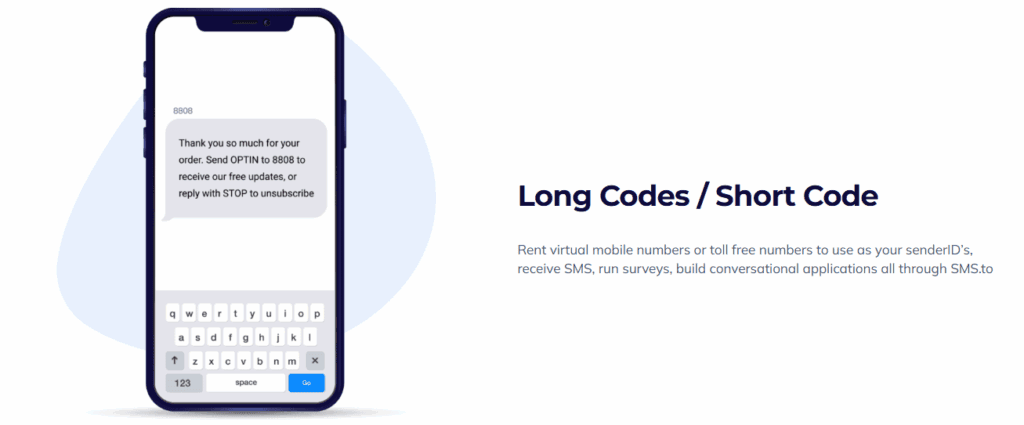
Short codes are the “big motorway lanes” of SMS. A short code is a special 3 to 6-digit number used only for messaging. You do not use it for calls, just for texts.
These numbers are ideal when you send very high volumes, or when your messages need to go out very fast. Banks, large retailers, media brands, and public services often rely on short codes for one-time passcodes, alerts, and heavy marketing campaigns.
- Built for very high volume: Short codes are designed for very high-speed A2P SMS, often more than 100 message segments per second.
- Tightly controlled: Carriers and industry bodies control short codes. You need formal approval before you can use one.
- Trusted by big senders: They are widely used by banks, major retailers, media brands, and public services for OTPs, alerts, and big campaigns.
Short code vs 10DLC is a classic trade-off. Short codes give you maximum speed and visibility. 10DLC numbers give you a local feel and lower fixed fees.
How 10DLC Works for Business SMS
If you want local reach without burning through your budget, 10DLC often hits a very nice sweet spot. It is built for everyday business texting and keeps carrier rules clear enough to work with.
Where 10DLC Fits Best
From my experience, 10DLC is a strong fit for small and mid-sized brands, especially when you send under about 100,000 messages a day. At that level, a short code is often overkill.
10DLC works well when you:
- Want a familiar local number: You want customers to see a local number that feels close and human.
- Need two-way SMS: You want real back-and-forth chats for sales or support.
- Run reminders and moderate campaigns: You send appointment reminders, alerts, and low to medium volume marketing.
- Care about delivery and compliance: You want better deliverability and cleaner compliance than old unregistered long codes.
Because 10DLC is now the expected standard for US A2P traffic, many providers treat it as the default for compliant local business messaging.
10DLC Registration Steps and Costs
To send A2P traffic over a 10DLC number, you move through three main steps. It can feel like lots of paperwork, but once it is done, it rarely needs your daily attention.
- Brand registration with The Campaign Registry: Provide your business details so carriers know who is sending.
- Campaign registration: You describe your use case, sample content, and target audience for each campaign.
- Number assignment: Your 10DLC number is linked to your approved campaign so you can send live traffic.
Based on timelines from large cloud providers, US brands can expect brand registration to take about 1–2 business days, with vetting taking another 1–2 days.
Campaign registration can take up to 4 weeks, and assigning the 10DLC number can take up to 10 days. International brands sending to the US may need up to 3 weeks for each of the early steps.
On costs, fee tables from messaging providers show:
- Brand application fees: Usually starts around 4 to 4.50 USD per brand.
- Optional extra vetting: For higher throughput, extra vetting can add about 40 to 41.50 USD per brand.
- Campaign registration fees: Often sit around 10 to 15 USD per campaign, with monthly charges usually between 1.50 and 10 USD based on volume and use case.
Some platforms add their own service fees. Others pass these charges straight through from TCR and carriers. From your side, the key point is that 10DLC has predictable, fairly low fixed costs compared with dedicated short codes.
10DLC Throughput and Limits
How fast you can send over 10DLC depends on a few main factors:
- Your vetting score: Higher scores usually unlock higher throughput.
- Your campaign type: Some use cases are allowed more speed than others.
- Carrier-specific rules: Each carrier can set its own limits and views on risk.
With the right approvals, 10DLC throughput can reach roughly 75 message segments per second. I usually recommend 10DLC for small to medium volume brands, and suggest moving to a short code once you regularly send more than 100,000 messages a day.
If you run frequent campaigns but still want a local caller ID and two-way chats, 10DLC is often a very good starting point. You can always step up to a short code later if your volume explodes.
How Toll-Free SMS and Texting Work
Toll-free numbers give you that familiar “customer service line” feel. You know those 800-style numbers you see on bills and websites? Many of them can now send and receive texts too.
Toll-free SMS has its own set of rules, but once you understand them, sending at scale becomes much smoother.
Toll-Free Verification and Compliance Rules
In recent years, regulators and carriers tightened toll-free SMS rules. They want to keep spam down and protect users, so they now expect more structure.
- As of 31 January 2024, unverified toll-free numbers are blocked from sending messages to the US and Canada. This did not come from one single “law” passed by Congress or Parliament. The cutoff was a result of industry-wide carrier compliance rules, enforced through the toll-free verification and registration program run by major North American carriers and coordinated via CTIA and the wider carrier ecosystem. Messaging providers then apply the block in their platforms.
- Toll-free SMS traffic now needs a verification submission that explains your business, your use cases, and your consent process. Once approved, your number is tagged as verified. This lowers false blocking and improves delivery.
- Some newer flows have become a bit simpler. For example, as of May 2025, toll-free SMS verification no longer requires an EIN or business registration number in that specific flow.
I suggest treating toll-free texting in a similar way to 10DLC. You provide clear opt-in details, respect opt-out commands, and keep content close to what you described in your verification submission.
Throughput, Sender Reputation and Reach
Throughput for toll-free SMS depends on the carrier and how your provider sets up your routes.
- A new US toll-free number often starts at around 3 message segments per second by default, but this can increase for verified senders.
- With the right configuration and use case, toll-free numbers can support delivery speeds that are close to short codes.
Compared with a typical unverified long code, a verified toll-free number tends to have:
- Higher trust with carriers for nationwide traffic
- Better consistency for large batches of alerts and notifications
- Lower risk of surprise blocking when you follow best practices
Toll-free SMS is strongest when you want one recognisable number for the whole US or Canada, instead of many local 10DLC numbers.
Typical Toll-Free SMS Use Cases
From what I see across brands, toll-free texting works well for:
- Payment reminders and billing alerts
- Account notifications and security alerts
- Customer service and support queues
- Appointment reminders for healthcare, salons, and other services
- National promotions where you want one easy-to-spot contact number
If you want a single branded “contact us” number that works across the US and Canada for both calls and SMS, a verified toll-free SMS number is often a very strong choice.
How Short Codes Compare For High Volume Messaging
With short codes, you’re looking at the premium lane of A2P messaging. A ‘VIP line’ per se.
They move fast, they are very reliable, and carriers treat them with a lot of respect. The trade-off is that they need more planning and budget than other options.
If you send the odd campaign now and then, short codes may feel big and heavy. But if you send huge bursts of messages, they can be exactly what you need.
Short Code Provisioning Time and Pricing
Short codes are not the cheapest option, so it helps to know the numbers up front.
- Monthly cost: Leasing a dedicated short code in the US usually costs between 500 and 1,000 USD per month, depending on whether it is a random or vanity code.
- Setup fees: Some providers add one-time setup fees. These can run from a few hundred dollars up to a couple of thousand for more complex campaigns
- Provisioning time: Getting a short code live takes time. Provisioning can take several weeks, often up to six weeks from application to live traffic.
Regulators in the US and Canada have also phased out shared short codes for most use cases. That means you now usually need a dedicated short code that belongs to your brand alone.
So when does this level of effort make sense for you? In my experience, short codes are a good fit when:
- You already send large volumes of SMS
- You can live with a fixed monthly fee for the number
- You can plan campaigns early enough to wait for approval
If that list speaks to you, a short code may be worth the extra work.
Throughput at Scale
Throughput is where short codes really stand out:
- Short codes are built for very high throughput, often 100 message segments per second or more
- With the right agreements, that speed can go well beyond 100 messages per second
- Carriers treat short codes as trusted high-volume senders
This makes them ideal for flash sales, TV voting, major event tickets, and bank alerts. Anywhere you need to send a lot of messages in a very short time, short codes do the heavy lifting.
If you need to send hundreds of thousands or even millions of messages in a tight window, and you want them to move very quickly, short code SMS is still the top-tier option.
When a Short Code Makes Sense
Short codes fit best when you are playing in the “big campaign” league. Ask yourself a few quick questions:
- Do you run large national campaigns with tight timing, like big retail events or media promotions?
- Do you send high volumes of OTPs and security alerts, and want the same number on every message?
- Do you want very strong brand recall, where a simple five or six-digit number is easy to remember and easy to type?
If you said yes to most of those, a short code is a strong candidate.
If your volume is modest, or your budget looks more like a small or mid-sized business, short codes can feel heavy. In that case, 10DLC or toll-free SMS is usually a friendlier starting point, and you can always step up to a short code when you are ready.
10DLC vs Short Code vs Toll-free, Side by Side
So now you know what each number type is, how do they stack up against each other?
When I help teams choose, we usually look at three things first: compliance, cost, and how it feels to your customers.
Deliverability and compliance tradeoffs
All three options are made for A2P messaging, but the “rules of the gate” are not the same.
If you skip the rules, carriers can slow you down or block you, so this part really matters.
For compliance:
- 10DLC
You need brand and campaign registration with TCR. If you send unregistered 10DLC traffic, you risk blocking and even fines.
- Toll-free
Toll-free numbers now need verification to send to the US and Canada. If your number is unverified or still pending, it can be fully blocked from sending SMS.
- Short codes
Short codes go through carrier and industry approval before they go live. They are tied to clear opt-in and program terms that you share with users.
So the pattern is simple: 10DLC gives you a local feel with a clear, structured compliance path. Toll-free gives you national reach on a customer-service style number with strong checks.
Short codes give you the highest trust and speed, but they ask for the most work to set up.
Seen this way, it comes down to two questions: how strict do you want it, and how much time can you spend setting it up?
Cost and speed to launch
Next up is cost and how fast you want to go live.
Per message prices are usually driven more by country and route than by the type of number you pick. US SMS marketing rates around 0.015 to 0.03 USD per segment, while many European markets sit higher.
The big differences show up in fixed fees and timelines.
10DLC
- Low one-off brand fees of around 4–4.50 USD and campaign setup fees of about 10–15 USD.
- Monthly campaign charges usually 1.50–10 USD, depending on volume and use case.
- Registration and provisioning often finish in several days to a few weeks.
Toll-free SMS
- Verification itself is often free or low-cost, though some providers add processing or account fees.
- If you upgrade throughput, your pricing tier may change.
- Verification times range from a few days to a few weeks, based on your volume and how complete your form is.
Short codes
- Dedicated short codes often cost 500–1,000 USD per month just to lease the code, with vanity codes on the higher end.
- Setup fees can run from 500 up to 2,500 USD, plus carrier charges.
- Provisioning usually takes 4–6 weeks because of carrier reviews and testing.
So if you want to launch fast and keep your fixed costs light, 10DLC or toll-free usually make more sense. Short codes behave more like an investment for long-term scale, once you know your volume is big and steady.
Brand perception and customer experience
Now think about how your number looks on someone’s phone. When your message pops up, what do you want that first reaction to be?
- 10DLC
Feels like a local business number.Great for regional brands, franchise locations, and any case where local presence is important.
- Toll-free
Feels like a national service line. People often link it with support, billing, or a central contact centre.
- Short code
Feels like an official broadcast channel. You see it a lot from banks, large tech brands, and broadcasters, which helps with trust for serious alerts.
So if you run a regional clinic network, you might want 10DLC numbers with local area codes so each clinic feels close to home.
If you run a national fintech, you might use a short code for OTPs and a toll-free number for support, so users know which number is sending which type of message.
When you lay it all out, it comes down to: do you want local, national, or “big brand” energy when your text lands on someone’s screen?
How To Choose Your Number Strategy
Choosing a sender number can feel big, but it gets much easier with a simple plan. I like to use a short framework so you can match your real needs to the right number.
Step 1: Get clear on what you send
First, ask yourself, “What am I actually sending?” List your main SMS flows:
- Transactional: OTPs, login codes, order confirmations, delivery updates.
- Operational: Appointment reminders, account alerts, internal notifications.
- Marketing: Campaigns, flash sales, win-back flows, product launches.
High-urgency flows, like OTP, often work best on a short code or a well-vetted 10DLC or toll-free number. Speed and trust matter a lot there, so you want your messages to move quickly and look very safe.
High-volume marketing blasts may grow into a good use case for a short code later. Steady, “evergreen” messages, like reminders and alerts, usually sit very well on 10DLC or toll-free.
Step 2: Map volume and geography
Next, zoom out and ask, “How many texts, and to where?”
You want to look at both size and reach:
- Daily and peak message counts
- Share of traffic to the US and Canada versus other regions
- Need for local presence versus one big national number
Here is a simple way to match that:
- If you send tens of thousands of messages per month in the US and care about local branding, 10DLC is a strong starting point.
- If you send higher volumes across the US and Canada and want one steady identity, a verified toll-free SMS number gives you broad reach and a stable “face” for your brand.
- If you run huge spikes for national promos, ticket drops, or TV-style voting,
the throughput of a short code gives you more breathing room.
For most growing businesses I work with, it is very normal to start with 10DLC or toll-free. Then, when the numbers grow and the budget allows, they add a short code for the heavy work.
Step 3: Pick one or mix and match
Good news here. You do not have to marry a single option forever.
Many larger brands use a mixed setup that lets each number type do what it does best:
- 10DLC numbers for local sales and support chats
- A verified toll-free number as the main national contact line
- A dedicated short code for high-volume OTP and major campaigns
Modern cloud providers let you run several “origination identities” under one account. That means you can have sender IDs, 10DLC, toll-free, and short code side by side. Your team simply picks the right sender for each job.
The key is to keep three things aligned for every number:
- Consent: How people opted in and how you store that proof.
- Content: What you send and how closely it matches what you told carriers.
- Routing: Which flows use which number and where that traffic is going.
Once you have that clear, your number strategy stops feeling random. You are making a smart choice that fits how you send messages today and how you want to grow.
Where SMS.to Fits Into Your Number Strategy
As you build a number strategy, you also need a messaging platform that can handle different number types in one place.
You do not want three different tools and ten different logins. You want one place where your team can see what is going on and make changes fast.
That is where SMS.to comes in. I work with teams who need exactly that.
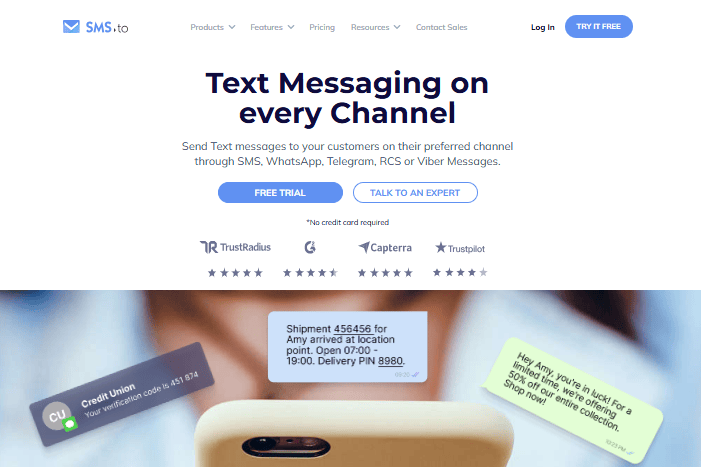
The SMS.to platform, run by Intergo Telecom, already supports long codes, short codes, and toll-free numbers. You can run one-way or two-way SMS, depending on what the number type allows.
You get to keep your number strategy in one clean dashboard.
This makes it possible to:
- Rent local long codes: Use them for 10DLC-style A2P messaging and keep that local feel.
- Connect a toll-free number: Use it for one-way campaigns or two-way chats, where that is supported.
- Work with short codes: Handle high-volume use cases and still manage content, templates, and reports in a single interface.
Because SMS.to is built as a CPaaS platform, you also get tools for both your tech and non-tech teams:
- A web app for your marketers and support team: Run campaigns, view reports, and reply to messages without touching code.
- APIs and webhooks for your developers: Plug SMS into your product, CRM, or custom systems in a structured way.
- Extra channels when you are ready: Add WhatsApp, Viber, Telegram, and RCS alongside SMS when your strategy grows past plain text.
This way, your number strategy does not sit on an island.
You choose the sender IDs that match your volume and budget, then plug them straight into your campaigns, OTP flows, and notifications.
Pick the Setup That Fits Your Traffic and Let SMS.to Handle the Rest
A2P SMS keeps growing in both value and rules. Global revenue keeps rising, and more enterprises now lean on text for important alerts and customer touchpoints.
From your side, the choices are:
- Use 10DLC when you want local numbers, predictable costs, and compliant A2P SMS in the US.
- Use toll-free SMS when you want a single national number with strong verification and wide reach across the US and Canada.
- Use short codes when your volume and urgency are high enough to justify the bigger price tag and longer setup.
With a platform like SMS.to that supports all three number types, you can start where you are today, and adjust your setup as your traffic grows, without tearing apart your messaging stack every time your number strategy changes.
You choose the mix. SMS.to keeps it running.
